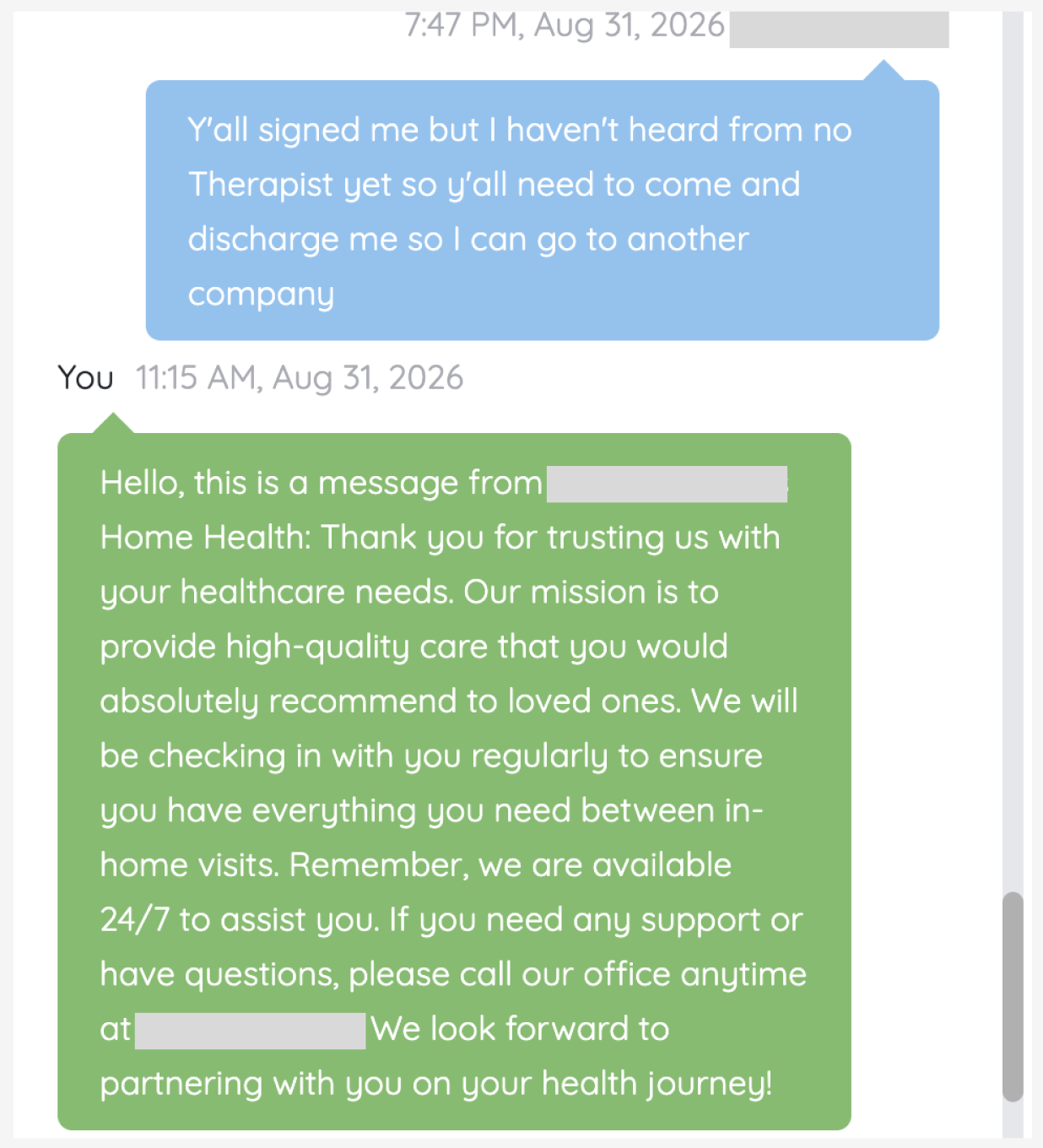
Here’s a real example of what proactive patient engagement looks like in practice.
The situation
- An RN completed a Start of Care visit on 8/29.
- The patient needed Physical Therapy, and it was discussed at the SOC visit.
- The agency ordered a therapy eval through a contracted therapy company.
- The therapy company assigned a PT — who was slow to reach out.
What the patient did
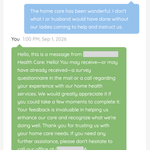
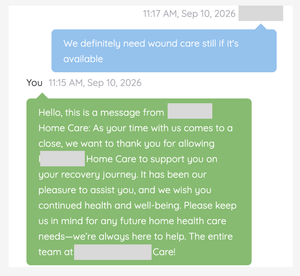
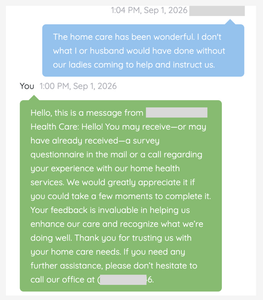
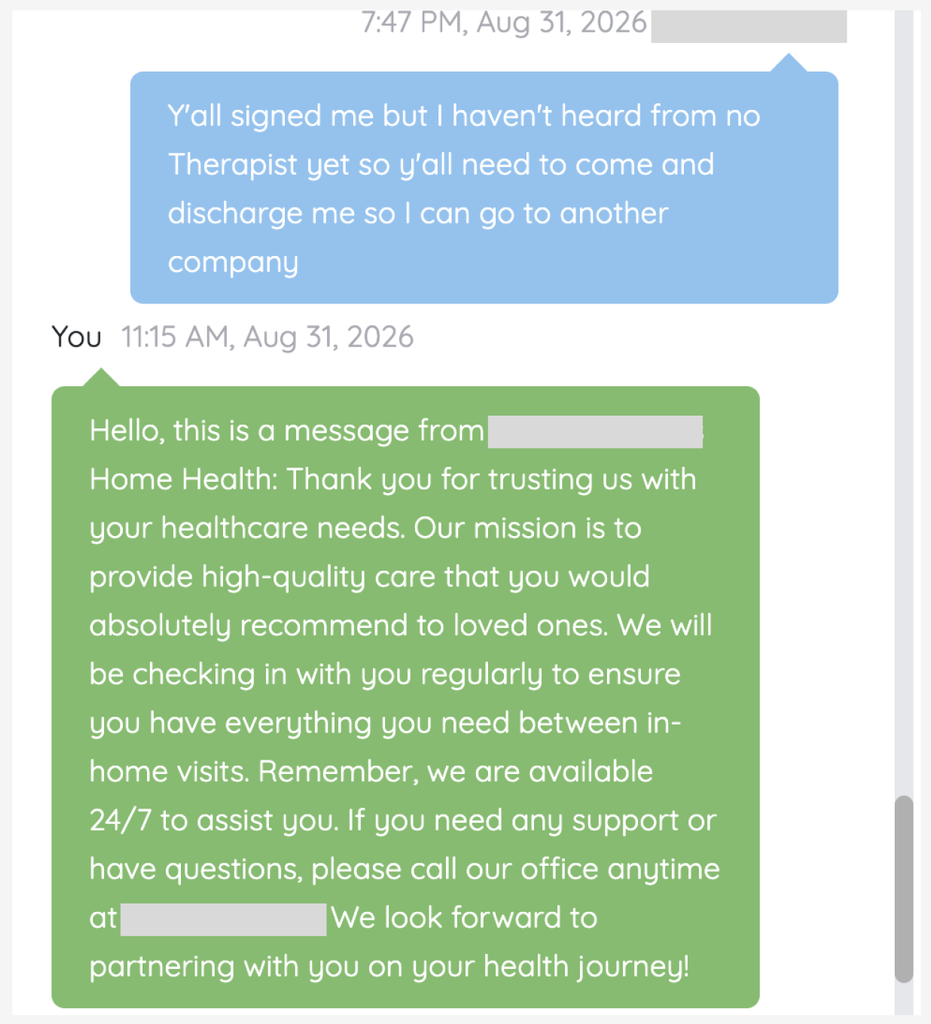
- The day after admission, the agency’s automated welcome message was sent to the patient at 11:15 AM.
- Eight hours later, the patient replied. They hadn’t heard from a therapist yet and wanted to be discharged so another agency with therapy could take over.
What the agency did
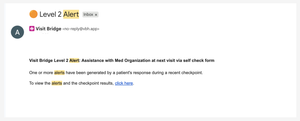
- The Clinical Manager received an automated email notification about the new patient message.
- The Clinical Manager clicked the direct link, reviewed the incoming message in Visit Bridge, and called the patient through the platform.
- They then coordinated with the nurse and the contracted PT company and resolved the issue before anyone showed up at the door.
- The patient stayed with the agency. No discharge, no lost episode.
The math
- Medicare average 30-day episode: $2,034
- Medicare LUPA threshold: 2 visits
- Visits completed if the patient had discharged: 1 (a LUPA)
- National average RN LUPA payment: $176.96
ROI on one message: $1,857.04 — and that assumes the patient only stayed 30 days.
The takeaway
Most patients don’t know what to do to be proactive about the care they need. Too often, an agency only catches the problem after a molehill has turned into a mountain. The real power of automated patient engagement isn’t just the content of the message — it’s the window of communication it opens with patients, without anyone lifting a finger.