How an Automated 5-Day Check-In Caught a Medication Concern Before the Next Visit

The 7 days after admission is when small problems turn into big ones — especially around medications. Here’s a real example of how an automated post-admission check-in surfaced a patient concern and got it handled before the next clinician walked through the door.

The situation

  • An RN completed a Start of Care visit on 9/10.
  • On 9/15, the patient was automatically sent a 5-day post-admission check-in survey focused on their initial experience and medications.

What the patient did

  • The patient completed the check-in survey and flagged a concern about managing their medications.

What the agency did

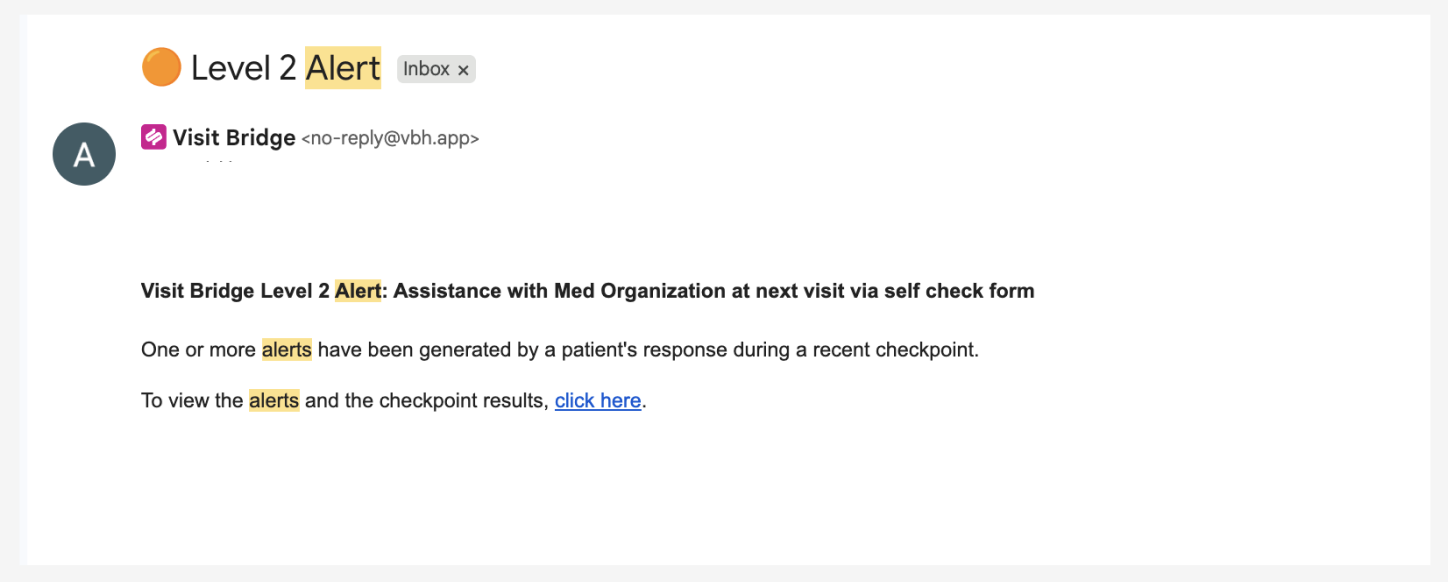
  • As soon as the survey was completed, Visit Bridge sent an automated email notification to the Clinical Manager.
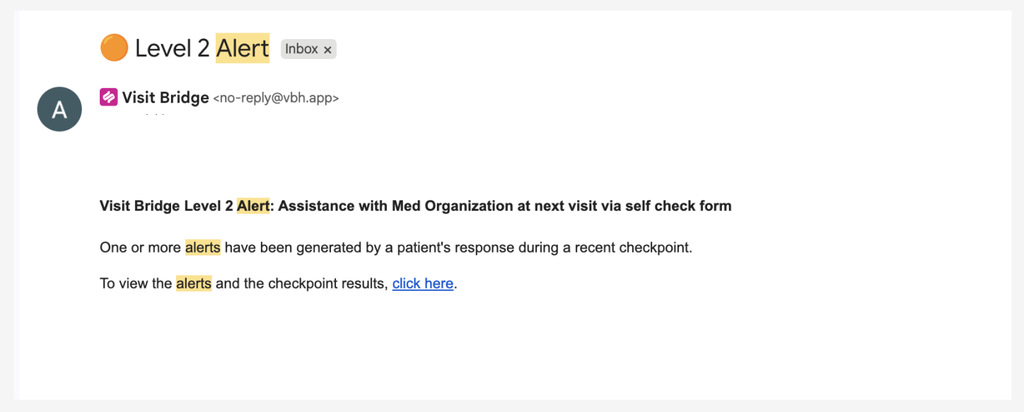
image 3
  • The Clinical Manager clicked the link and reviewed the patient’s answers along with the alert.
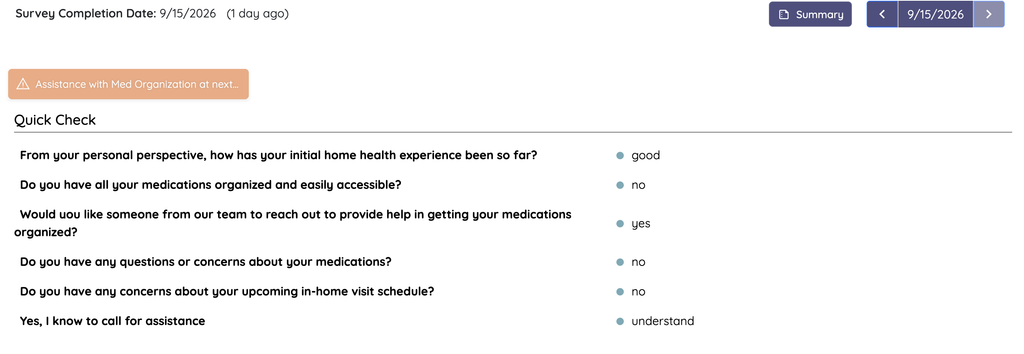
image 4
  • She called the patient directly through the Visit Bridge Health platform from her office number to help in the short term.
  • She then looped in the next visiting clinician so they knew about the patient-stated concern before the 9/16 visit.
  • The field clinician walked into the 9/16 visit with a clear plastic bag for medication organization and additional medication administration education, ready to address the issue on the spot.

The takeaway

Most patients won’t call the office to say they’re confused about their medications. They’ll wait for the next visit — or worse, they’ll guess. An automated check-in gives them a simple way to speak up, gives the office a real-time alert, and gives the field clinician a head start. The problem gets solved on the very next visit instead of turning into a hospitalization.
How a Post-Discharge Follow-Up Turned Into a Wound Care Admission (and $2,100)

Discharge isn’t the end of the relationship — but for most agencies, it’s the end of the communication. Here’s a real example of how an automated post-discharge touchpoint brought a former patient back on service the moment they needed care again.

The situation

  • The patient was discharged from home health on 8/3.
  • On 8/4, the agency set the patient up on an automated post-discharge engagement track through Visit Bridge Health — weekly touchpoints running through 9/10.

What the patient experienced

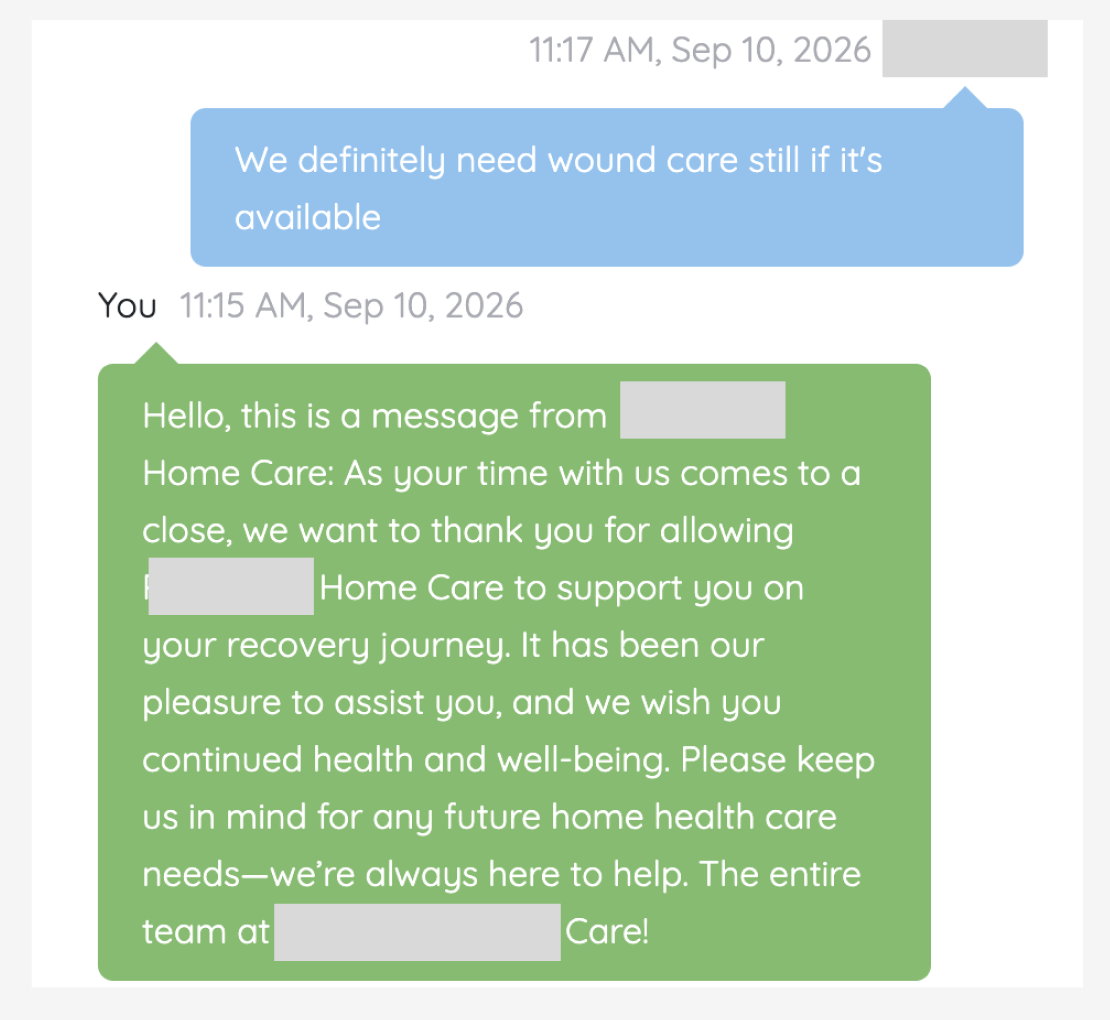
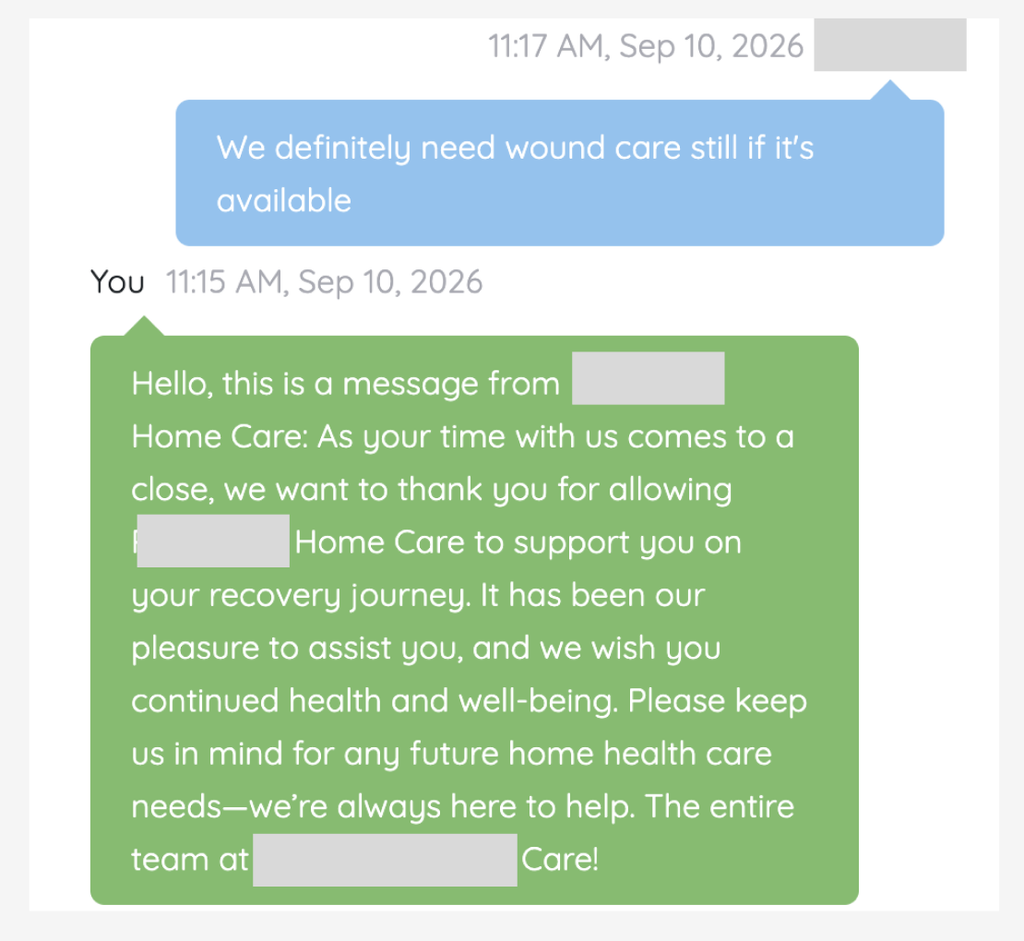
  • On 9/10, the patient received the final message in the track.
  • They replied that day, asking for help with wound care.
image 7

What the agency experienced

  • Visit Bridge sent an automated email to the Clinical Manager notifying them of a new patient message.
  • The Clinical Manager clicked the direct link, reviewed the message, and called the patient.
  • She coordinated a new Start of Care for 9/12 — two days after the patient reached out.

The math

  • Late, Community, Wound, Medium functional impairment, no comorbidity adjustment (HIPPS 3CB11)
  • Case-mix weight: 1.0848
  • CY 2026 national standardized 30-day base rate: $2,038.22
  • Unadjusted 30-day period payment: $2,038.22 × 1.0848 = about $2,211
  • If the same patient also earns a comorbidity adjustment, the same period pays more:
  • Low comorbidity (3CB21), weight 1.1416: about $2,327
  • High comorbidity (3CB31), weight 1.2838: about $2,617
  • For comparison, the other functional levels in the same late/community/wound bucket with no comorbidity: Low function (3CA11) is 1.0048, or about $2,048, and High function (3CC11) is 1.2201, or about $2,487.

ROI on one message: $2,038.22 using the national 30-day standard and assuming the patients length of stay was only 30 days.

The takeaway

Discharged patients don’t call the office when a new problem shows up. They call whoever is easiest to reach — a doctor, an ER, or another agency. Automated post-discharge engagement keeps your agency at the top of the list, so when the patient needs care again, the text thread is already open and the admission comes back to you.

How Automated Patient Engagement Turned a Great Care Experience Into HHCAHPS Feedback and a Google Review

Positive patient feedback is worth a lot to a home health agency in star ratings, referrals, and staff morale. The problem is that most of it never gets captured. Here’s a real example of how automated engagement did the capturing without anyone on the team lifting a finger.

The situation

  • The agency was struggling to get HHCAHPS surveys returned from patients.
  • An RN completed a Start of Care visit on 8/1.
  • That same day, the patient started receiving automated engagement messages and check-ins from the agency through Visit Bridge Health.
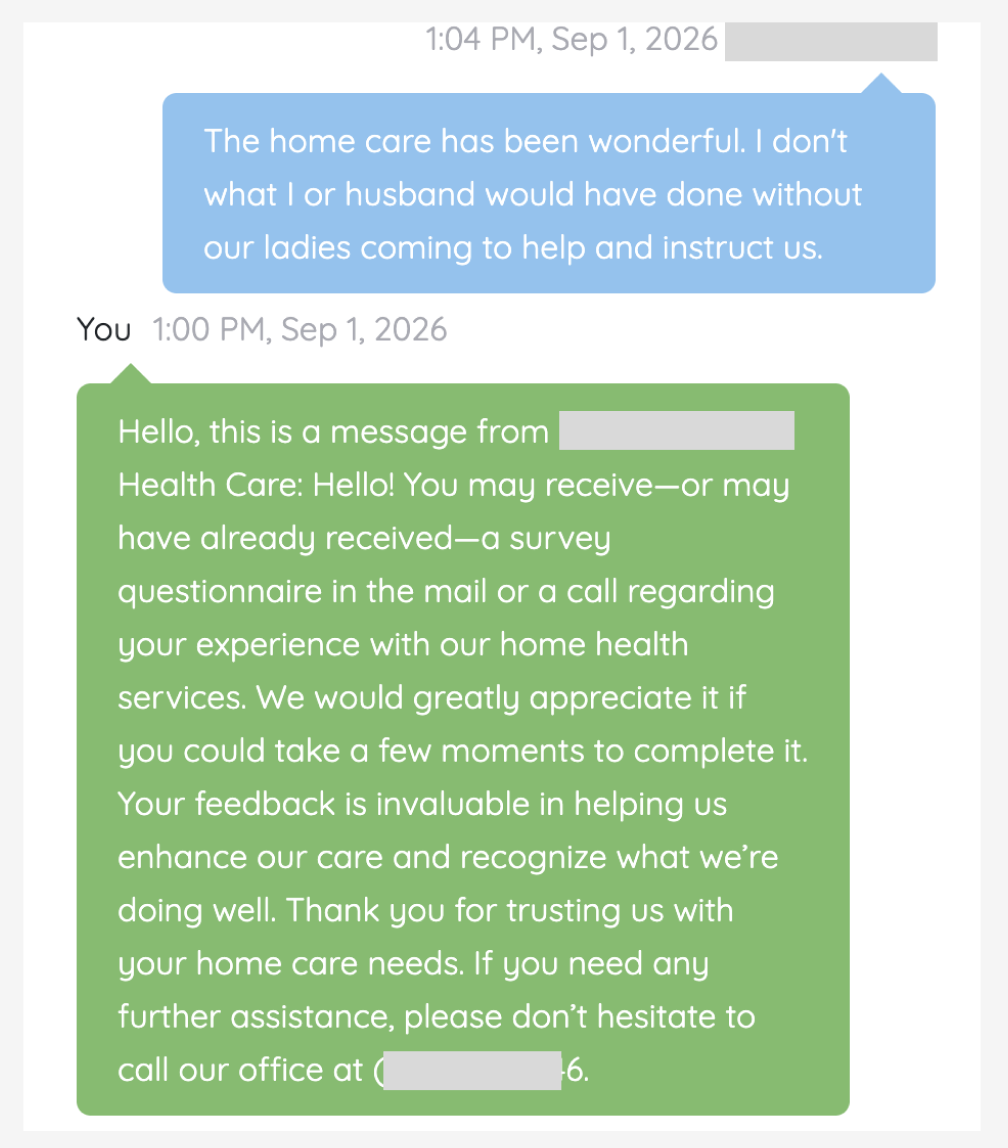
  • On 9/1, 30 days into the initial cert period, the patient became eligible for the HHCAHPS survey and the system automatically sent an educational text about the survey that day.

What the patient did

  • Four minutes after receiving the message, the patient replied with a message about their care experience.
image 1

What the agency did

  • Visit Bridge sent an automated email to the Clinical Director notifying them of a new patient message.
  • The Clinical Director clicked the direct link, reviewed the message in Visit Bridge, and identified the “gals” the patient mentioned by name.
  • Those clinicians were recognized at the next all-hands meeting.
  • On 9/2, an automated Google review request went to the patient and her husband, inviting them to share their experience to help others in the community.

The takeaway

Patients who are happy with their care rarely go out of their way to say so. Without a prompt, that feedback stays in the living room. Automated engagement gives patients an easy way to speak up, gives the agency a chance to recognize the clinicians who earned it, and turns a good experience into HHCAHPS responses and public reviews — all without anyone on the team having to remember to ask.

How Automated Patient Engagement Saved a Contracted Therapy Issue (and a $1,857 Episode)

Here’s a real example of what proactive patient engagement looks like in practice.

The situation

  • An RN completed a Start of Care visit on 8/29.
  • The patient needed Physical Therapy, and it was discussed at the SOC visit.
  • The agency ordered a therapy eval through a contracted therapy company.
  • The therapy company assigned a PT — who was slow to reach out.

What the patient did

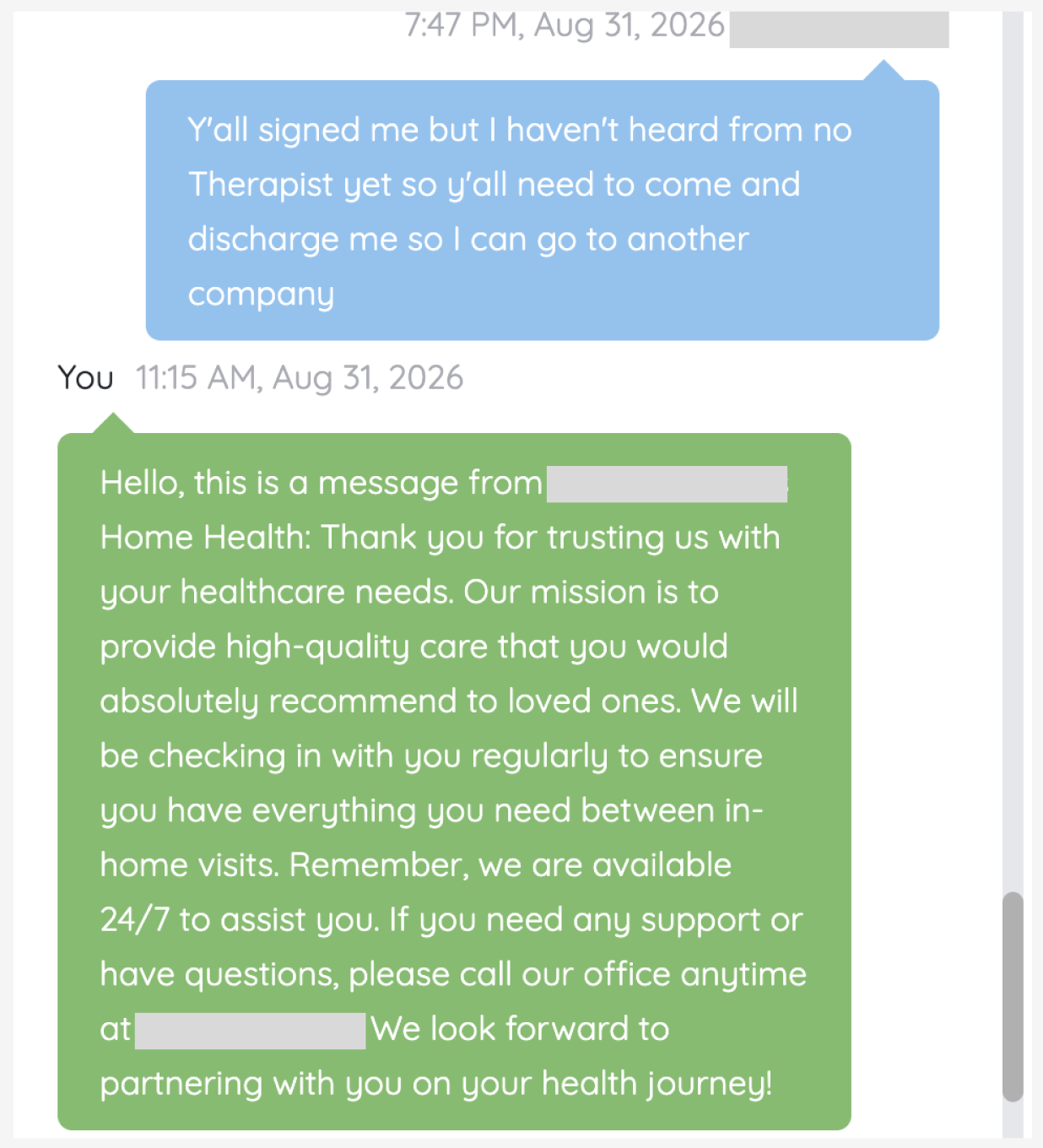
  • The day after admission, the agency’s automated welcome message was sent to the patient at 11:15 AM.
  • Eight hours later, the patient replied. They hadn’t heard from a therapist yet and wanted to be discharged so another agency with therapy could take over.
image

What the agency did

  • The Clinical Manager received an automated email notification about the new patient message.
  • The Clinical Manager clicked the direct link, reviewed the incoming message in Visit Bridge, and called the patient through the platform.
  • They then coordinated with the nurse and the contracted PT company and resolved the issue before anyone showed up at the door.
  • The patient stayed with the agency. No discharge, no lost episode.

The math

  • Medicare average 30-day episode: $2,034
  • Medicare LUPA threshold: 2 visits
  • Visits completed if the patient had discharged: 1 (a LUPA)
  • National average RN LUPA payment: $176.96

ROI on one message: $1,857.04 — and that assumes the patient only stayed 30 days.

The takeaway

Most patients don’t know what to do to be proactive about the care they need. Too often, an agency only catches the problem after a molehill has turned into a mountain. The real power of automated patient engagement isn’t just the content of the message — it’s the window of communication it opens with patients, without anyone lifting a finger.