Effective home health patient engagement reduces avoidable problems between visits, improves patient experience scores, and gives clinicians timely, actionable information.
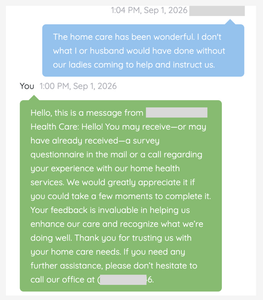
- Two-way, messaging-first communication that works on patients’ existing phones (no new app).
- HIPAA‑compliant surveys and automated alerts that surface risks and document outreach.
- Analytics and response tracking that prioritize visits, reduce readmission risk, and protect your public reputation.
Schedule a demo to see how automated SMS and HIPAA-compliant messaging fit into your agency’s workflow.
The role of technology in patient engagement
Technology should extend clinicians’ reach between visits without adding complex workflows. Two-way texting, automated check‑ins, and HIPAA‑compliant surveys provide low-friction touchpoints that keep patients safer and clinicians informed.
Why these tools matter:
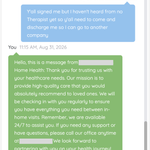
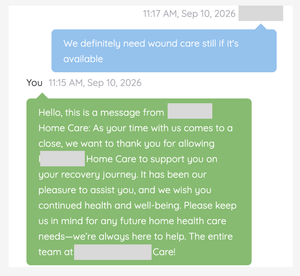
Two-way texting enables simple symptom checks, appointment confirmations, and brief care instructions directly on a patient’s phone—faster than voicemail and more accessible than portals.
HIPAA‑compliant surveys collect standardized patient experience and safety data, while retaining secure audit trails and consents required for regulated programs.
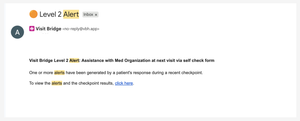
Real-time analytics and alerts flag medication issues, fall risk, or missed visits so clinicians can intervene proactively.
Key strategies to enhance engagement
1. Implement structured between‑visit check‑ins
Send brief, scheduled SMS check‑ins focused on pain, medication adherence, and wound status. Keep questions short, use clear response options (e.g., 1 = OK, 2 = Needs attention), and escalate automatically when responses indicate concern.
2. Use two‑way messaging for rapid triage
Enable clinicians and care coordinators to exchange short messages with patients and caregivers for clarification before home visits. Two‑way texting reduces missed problems and improves visit preparedness without forcing an app install.
3. Deploy HIPAA‑compliant surveys for patient experience
Automate patient experience surveys after episodes of care or at regular intervals to track measures used in public reporting and value‑based programs. Tie survey results to clinician dashboards so issues are remediated quickly.
4. Maintain an emergency mass‑text capability
For urgent events (severe weather, recall, public health alerts), an emergency mass‑text can reach your patient population rapidly. Combine this with response tracking to document outreach and compliance.
5. Automate review and reputation workflows
When appropriate, follow satisfied patient responses with an automated, HIPAA‑safe request for an online review—improving your public profile while preserving privacy.
Benefits and outcomes of effective engagement
When deployed thoughtfully, messaging-first engagement supports the outcomes agency leaders care about:
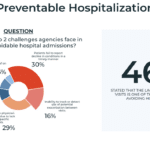
Reduced avoidable hospital use: Early symptom detection and quick clinician follow‑up can reduce escalation that leads to ED visits or readmissions. Home Health Value‑Based Purchasing (HHVBP) increasingly ties payment to outcomes and improvement efforts. (cms.gov)
Improved patient experience scores: Home health patient experience (Home Health Care CAHPS) is publicly reported and influences referrals, payer relationships, and value‑based program performance. Systematic experience collection helps agencies respond to concerns before they affect scores. (cms.gov)
Secure, auditable communication: Messaging platforms that meet HIPAA administrative and technical safeguards (including Business Associate Agreements and secure data handling) let agencies communicate by text while managing regulatory risk. See HHS guidance on HIPAA responsibilities for covered entities and business associates. (hhs.gov)
Measurable engagement gains: A body of evidence shows SMS‑based interventions improve appointment attendance, adherence, and some prevention outcomes—making text messaging a practical modality for between‑visit engagement. Use published reviews to design evidence‑based message cadence and content. (journals.sagepub.com)
Implementation checklist for agency leaders
Start small, measure fast, and scale what works:
Choose a messaging vendor that offers a HIPAA Business Associate Agreement, audit logs, encryption, and configurable consent flows.
Map 3–5 high‑value use cases (e.g., medication check, wound photo follow‑up, post‑hospital discharge check‑in) and pilot for 4–8 weeks.
Define escalation rules: which responses auto‑alert clinicians, which generate a nurse call, and which are documented for quality reporting.
Train clinicians on plain‑language message templates and consent scripts; emphasize no new app so patients can use their phones easily.
Monitor engagement metrics and tie results to quality programs (HHVBP, HH QRP) and patient experience reporting. (cms.gov)
Privacy and compliance brief
Texting that touches protected health information must meet HIPAA Privacy and Security Rule requirements. Secure platforms, clear patient consent, and documented safeguards (encryption, access controls, retention policies) reduce regulatory risk—while still allowing the convenience of SMS for patients who opt in. Refer to HHS resources and your compliance team when building policies. (hhs.gov)
Conclusion — why engagement matters now
Home health patient engagement is no longer optional: value‑based payment, public experience reporting, and workforce limits make efficient between‑visit communication essential. A messaging‑first approach—two‑way texting, HIPAA‑compliant surveys, emergency mass‑texting, and analytics—lets agencies scale touchpoints without adding staff and improves the information clinicians need to deliver safer, higher‑quality care.
Helping Care‑at‑Home build trust with patients and clinicians, turn insights into opportunity, and strengthen public brand reputation.
Next step: Schedule a demo to see a HIPAA‑compliant messaging workflow for medication checks, post‑discharge follow‑up, and emergency alerts. What If Your Agency Had More Touch‑points Without More Work?
Selected sources: CMS Home Health Value‑Based Purchasing; Home Health Care CAHPS (CMS); HHS summary of HIPAA privacy and security obligations; umbrella reviews on the role of SMS in healthcare; CDC/HHS guidance on texting for public health communication. (cms.gov)