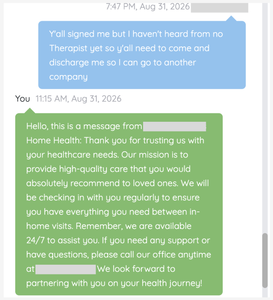
Discharge isn’t the end of the relationship — but for most agencies, it’s the end of the communication. Here’s a real example of how an automated post-discharge touchpoint brought a former patient back on service the moment they needed care again.
The situation
- The patient was discharged from home health on 8/3.
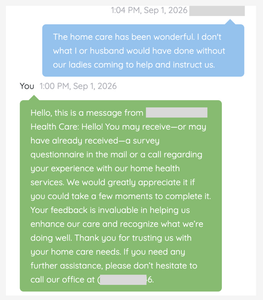
- On 8/4, the agency set the patient up on an automated post-discharge engagement track through Visit Bridge Health — weekly touchpoints running through 9/10.
What the patient experienced
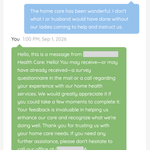
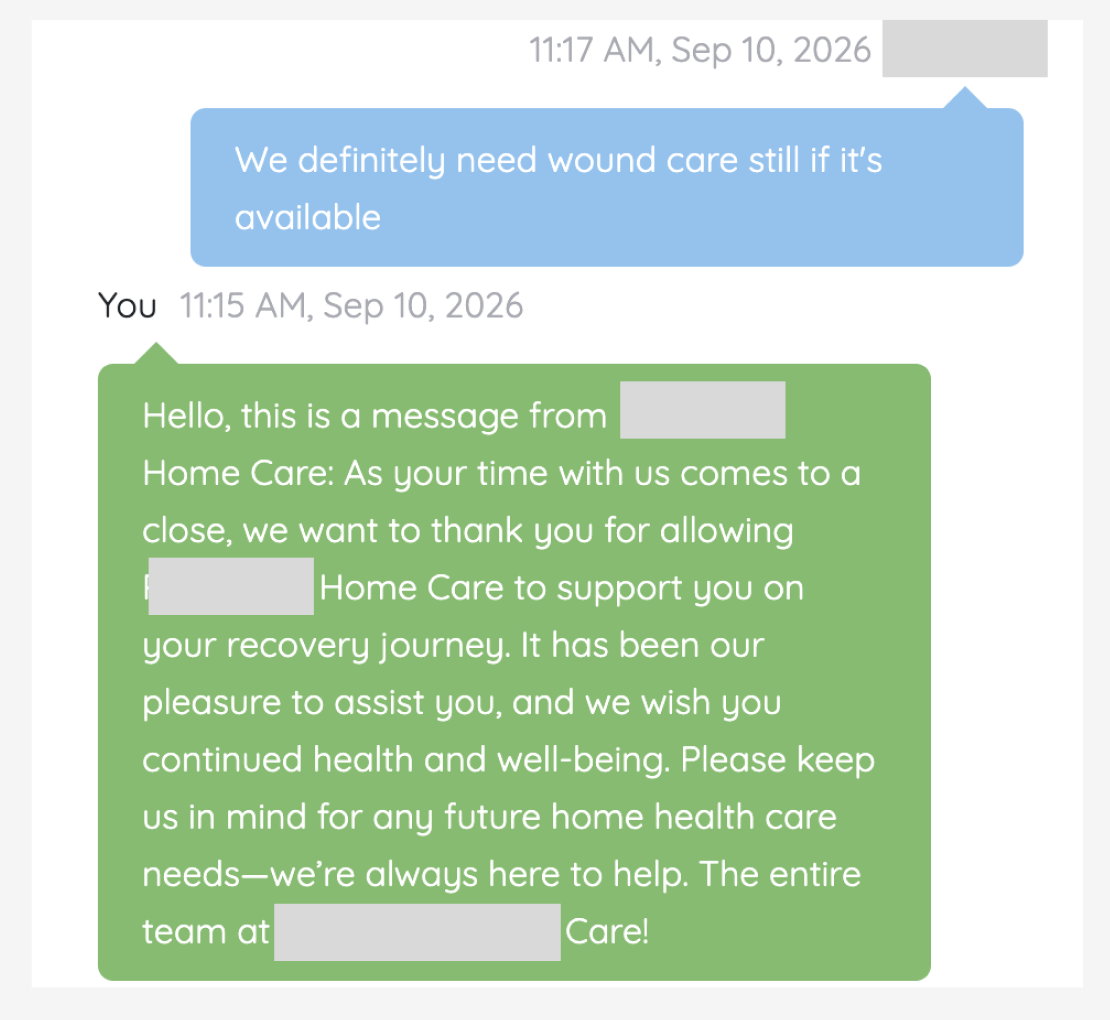
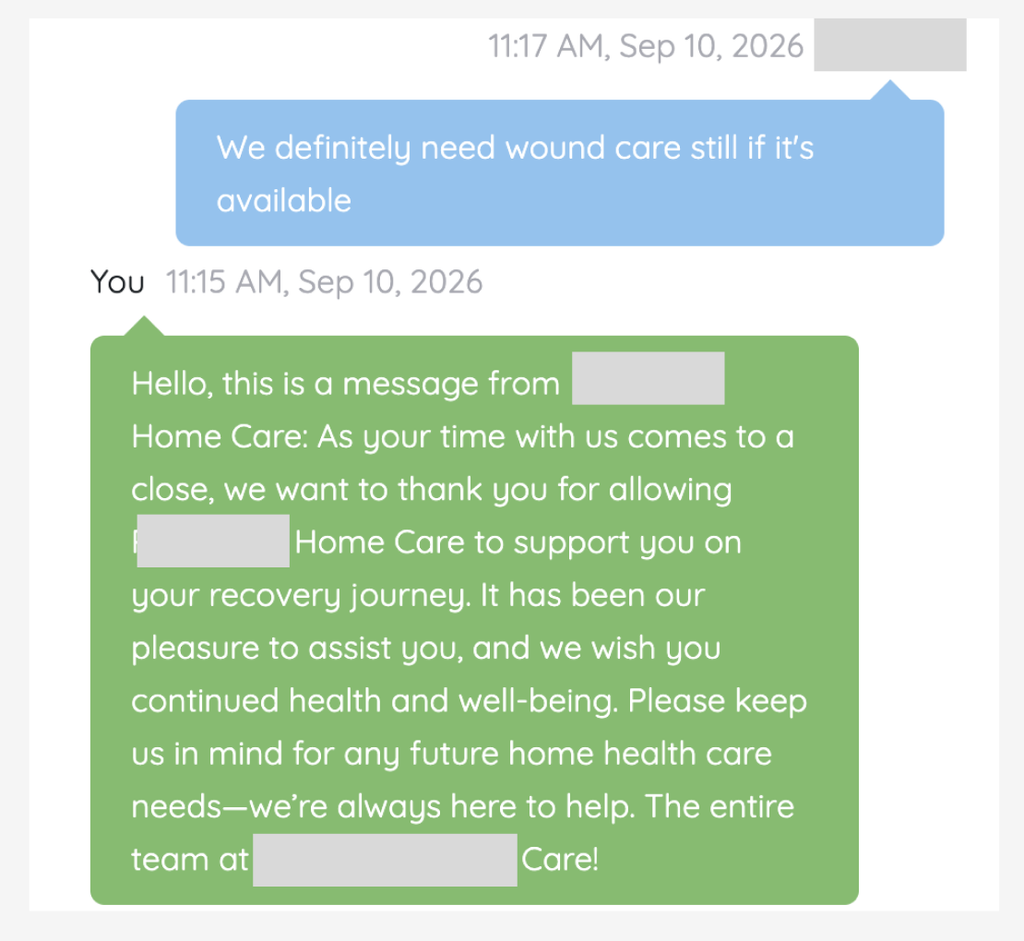
- On 9/10, the patient received the final message in the track.
- They replied that day, asking for help with wound care.
What the agency experienced
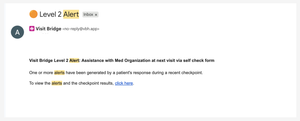
- Visit Bridge sent an automated email to the Clinical Manager notifying them of a new patient message.
- The Clinical Manager clicked the direct link, reviewed the message, and called the patient.
- She coordinated a new Start of Care for 9/12 — two days after the patient reached out.
The math
- Late, Community, Wound, Medium functional impairment, no comorbidity adjustment (HIPPS 3CB11)
- Case-mix weight: 1.0848
- CY 2026 national standardized 30-day base rate: $2,038.22
- Unadjusted 30-day period payment: $2,038.22 × 1.0848 = about $2,211
- If the same patient also earns a comorbidity adjustment, the same period pays more:
- Low comorbidity (3CB21), weight 1.1416: about $2,327
- High comorbidity (3CB31), weight 1.2838: about $2,617
- For comparison, the other functional levels in the same late/community/wound bucket with no comorbidity: Low function (3CA11) is 1.0048, or about $2,048, and High function (3CC11) is 1.2201, or about $2,487.
ROI on one message: $2,038.22 using the national 30-day standard and assuming the patients length of stay was only 30 days.
The takeaway
Discharged patients don’t call the office when a new problem shows up. They call whoever is easiest to reach — a doctor, an ER, or another agency. Automated post-discharge engagement keeps your agency at the top of the list, so when the patient needs care again, the text thread is already open and the admission comes back to you.